

Pet-Friendly Window & Door Solutions for Homeowners

If you live with pets, you know the drill. Tail-wagging excitement turned into nose prints on the glass, claws digging into door frames when the mail arrives, or screens shredded after a cat spotted a squirrel. Standard glass and mesh were never really designed to handle that kind of daily enthusiasm.
Upgrading to pet-friendly options isn't just about stopping the damage. It saves you from constantly replacing torn mesh, keeps your home comfortable, and gives your dog or cat a safe way in and out.
1. Upgrade to Impact and Scratch-Resistant Glass
Standard window glass scratches surprisingly easily from repetitive pawing. Worse, if a large or energetic dog jumps against a standard double-pane door, there’s a real risk of the pane cracking or shattering.
Tempered Safety Glass: Heat-treated glass is roughly four times stronger than standard annealed glass. If it ever does break under extreme force, it crumbles into small, dull pebbles instead of sharp, dangerous shards. You can review safety testing standards via the National Glass Association.
Protective Coatings: Specialty Low-E coatings do double duty—they boost your home's insulation while adding a protective outer layer that resists micro-scratches from claws and dirt.
Laminated Glass: Laminated glass sandwiches a tough vinyl interlayer between glass sheets. It’s exceptionally hard to scratch through and acts as a built-in sound barrier if your pet reacts to outside noise.
2. Swap Fragile Screens for Heavy-Duty Pet Mesh
Standard fiberglass screens don't stand a chance against a climbing cat or a heavy dog leaning out to smell the breeze. Once a screen gets a tear, it usually unravels fast.
Vinyl-Coated Polyester: Pet screen mesh is woven from heavy polyester threads coated in durable vinyl, making it up to seven times stronger than standard insect screens.
Built to Withstand Claws: It resists puncturing, stretching, and tearing, even when pets push their full weight against it.
Good Airflow & Visibility: Despite being thicker, modern pet screens still let in plenty of fresh air and light without feeling like you're looking through a fence.
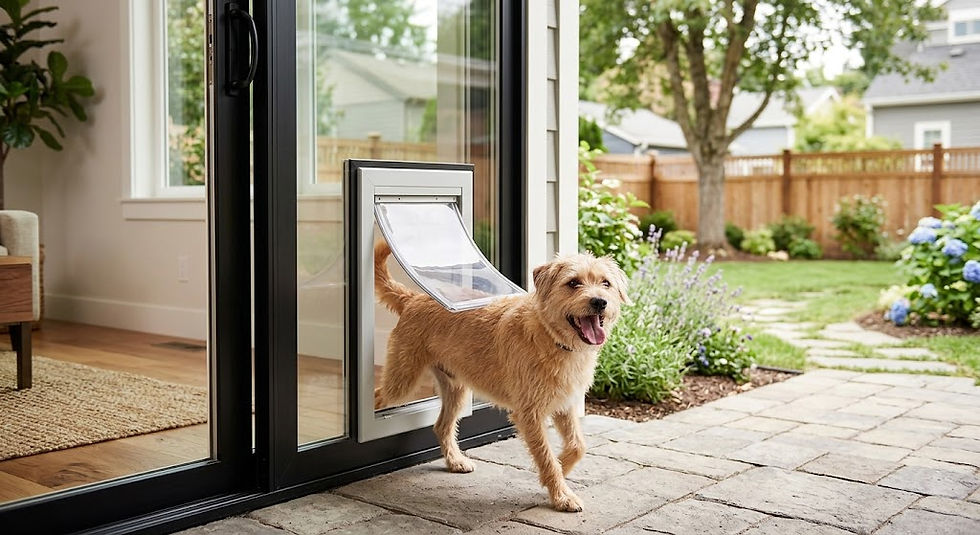
3. Consider an In-Glass Integrated Dog Door
Temporary door inserts that slide into your patio door track seem convenient, but they usually ruin your door’s seal, leave your home vulnerable to break-ins, and block half your doorway. An in-glass pet door is built directly into the glass panel for a clean, permanent setup.
Factory-Sealed Efficiency: The pet door unit is fitted directly inside a dual- or triple-pane glass unit during production. This keeps your home insulated and prevents cold drafts or summer heat from leaking in.
Uncompromised Security: Because the pet door is built into the glass, your sliding door’s original locking mechanism works normally.
Smart Weather Flaps: Quality units use magnetic closures, double flaps, or microchip-activated access doors that only unlock when your pet approaches with their collar tag.
What to Keep in Mind Before You Buy
Solution | Primary Benefit | Best For |
Tempered/Laminated Glass | Won't shatter into sharp pieces, high impact resistance | Large dogs and energetic jumpers |
Vinyl-Coated Pet Screen | Resists tears, stretching, and claw punctures | Cats that climb screens, dogs that paw at patio doors |
In-Glass Pet Door | Preserves door locks and thermal insulation | Homes with fenced yards or patio access |
Common Questions
Can you install a pet door into an existing sliding glass door?
Not directly into the old glass. Because tempered glass shatters if cut, a custom glass pane with a pre-cut, factory-sealed opening must replace your door's current glass panel.
Does pet screen mesh block natural light?
Because the threads are thicker, pet mesh reduces light slightly compared to ultra-thin mesh, but the difference is minimal and well worth avoiding constant screen replacements.
How do I size a pet door properly?
Measure your pet from the floor to the top of their shoulder, as well as their chest width. The top of the flap should sit at least an inch above their shoulder height, with a low enough threshold for them to step through comfortably as they grow older.
Ready to Pet-Proof Your Windows and Patio Doors?
You don't have to choose between keeping your home energy-efficient and giving your pets the freedom they deserve. At Eisenbart & Sons Windows and Doors, we specialize in custom, high-durability window and door solutions tailored to your home and your four-legged family members.
Whether you need heavy-duty screen replacements, scratch-resistant safety glass, or a seamless in-glass dog door, our team is here to help you design the perfect fit.


Comments